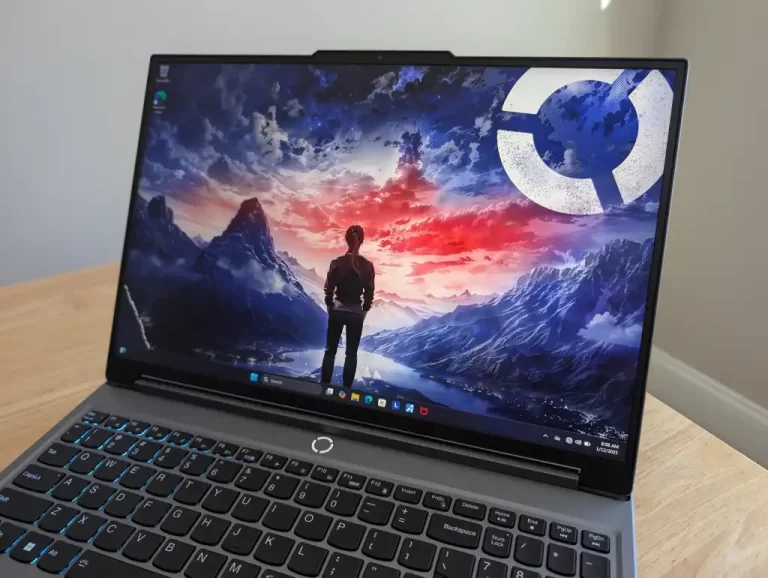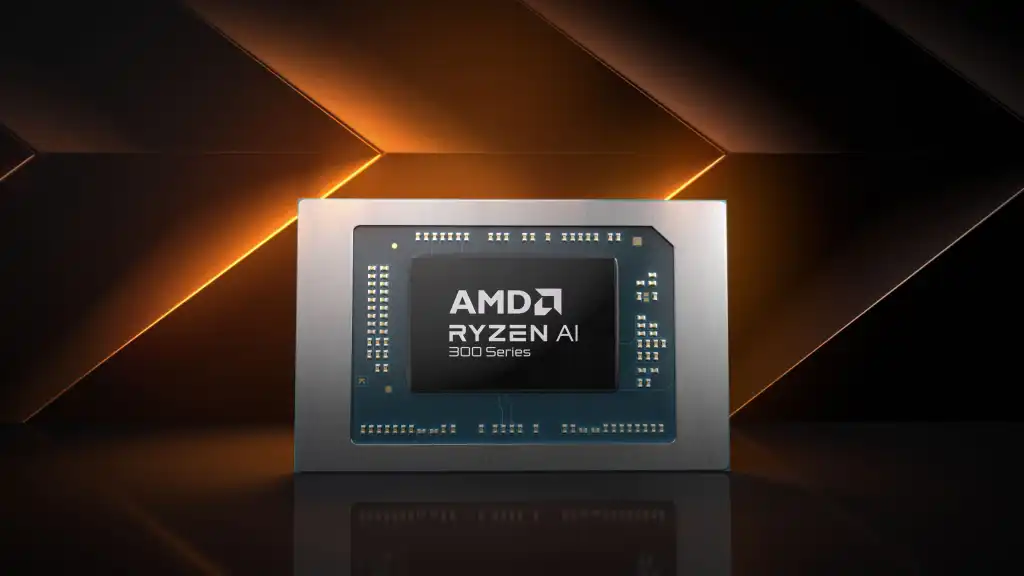
AMD is giving gamers an early version of AMD Fluid Motion Frames 2 (AFMF2), an AI-powered technology that generates additional frames per second for gamers using laptops with AMD Ryzen AI 300 processors. It’s a significant improvement of about 30-40%.
Specifically, AFMF 2 uses the new technology to boost frame rates in Cyberpunk: 2077 from 56 frames (1080p, low settings, balanced FSR) to about 100 FPS, with AMD saying similar gains will be seen in other games. Currently, AMD is offering AFMF 2 as a technical preview, but the technology will be incorporated into AMD’s Adrenalin Edition software at a later date.
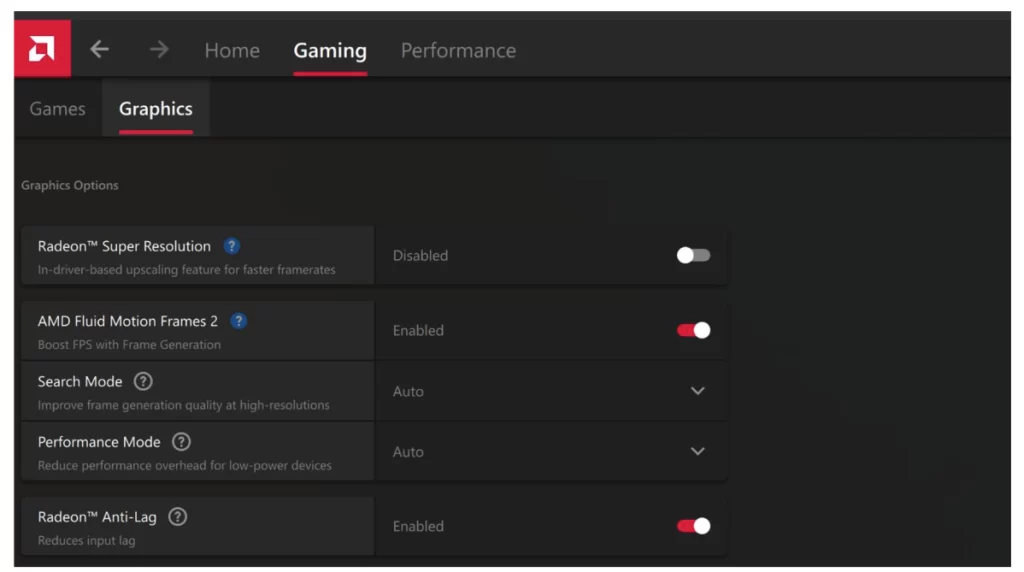
AFMF2 is the second generation of the AFMF technology that AMD launched in January. The Adrenalin Edition software offers several tools to improve gameplay. For example, Radeon Super Resolution upscales the game’s rendered image to simulate a higher resolution scene.
Typically, gamers prefer the highest frame rate at the highest resolution and best possible image quality. AFMF2 addresses the first part of this by using AI and artificially creating additional images between the images from the GPU that the game needs. The additional images make the gaming experience smoother and make it seem as if you have a more powerful GPU. All these new features are stored in AMD’s so-called HYPR-RX profile for gaming.Typically, gamers prefer the highest frame rate at the highest resolution and best possible image quality. AFMF2 addresses the first part of this by using AI and artificially creating additional images between the images from the GPU that the game needs. The additional images make the gaming experience smoother and make it seem as if you have a more powerful GPU. All these new features are stored in AMD’s so-called HYPR-RX profile for gaming.
Variable Graphics Memory: Newly Added
There’s something new, though. AFMF 2 works in tandem with Variable Graphics Memory, a new feature AMD is adding to its repertoire. VGM allows your laptop to reallocate up to 75 percent of your system memory to dedicated VRAM (as opposed to memory that’s already shared between the CPU and GPU).
The message here is pretty simple: if you buy a Ryzen AI 300 laptop with a lot of system RAM (say, 32GB compared to a 16GB system), you can allocate some of that system RAM to the GPU, which will improve gaming performance. For example, on a 32GB system, AMD announced that it’s increasing the “dedicated” VRAM from 512MB to a whopping 8GB on its Radeon 890M systems, improving overall graphics performance. However, VGM must also be enabled. In the Adrenalin application’s performance settings, you can enable VGM from the “Tuning” tab. The options are “Low,” “Medium,” or “High.” The last two options essentially switch VGM to maximum performance.
Like AFMF, second-generation AFMF 2 and VGM can’t make something out of nothing either. The company announced on Wednesday that it will tune the game to achieve at least 50 fps using various combinations of resolution and graphics levels, and then encourage players to boost frame rates even further with AFMF 2. Of course, AFMF 2 boost will also vary by system and game.
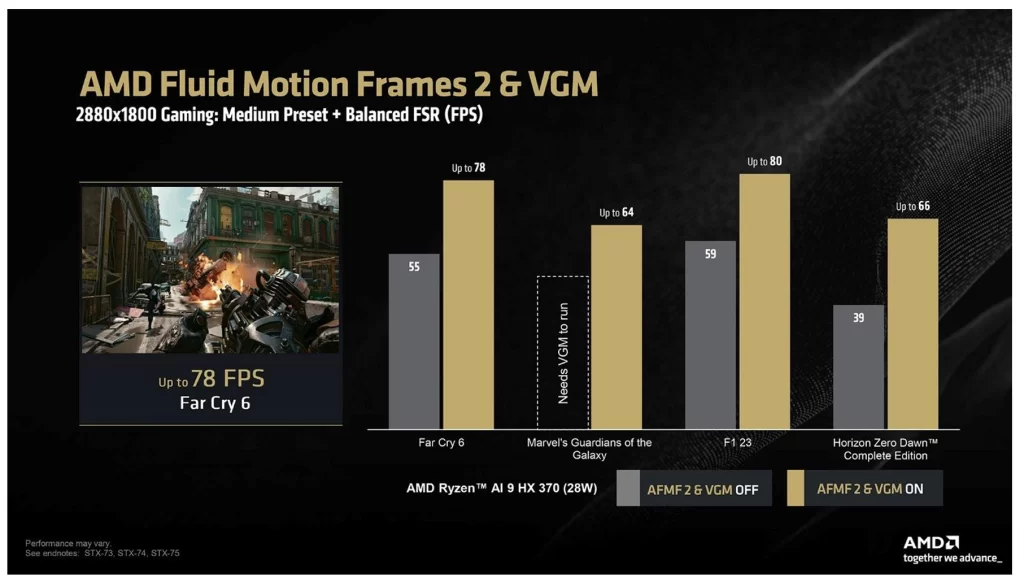
Nonetheless, the projected improvements are impressive. AMD compared two AI 9 HX 370 systems, one with AFMF 2/VGM off and one with AFMF 2/VGM on, and saw a significant increase in frame rates. Even better, the improvement carried over from 1080p games to older games up to 2,880 x 1,800 resolution.
Of course, these AI-powered gaming improvements aren’t just from AMD. Nvidia has its own AI-powered frame interpolation technology within its DLSS 3 technology, which upscales graphics and inserts additional AI-powered frames. However, this requires a dedicated Nvidia graphics card to be installed, whereas AMD’s AFMF2 also comes with integrated laptop graphics capabilities. Whichever way you look at it, both are solid justifications for investing in the latest CPU and GPU technology.